




Heat 1 to 5, printed on every card
SpicyNode.cc spicy AI chat on a five-level heat scale
- 5
- heat levels, each defined plainly on the scale
- 16
- cooks on the rack, every one an AI character
- 3
- lines in each opener on the pass
- 23–55
- ages from 23 to 55, every one with a trade and a town
Every cook here is fixed at one printed heat level, and she keeps to it. You decide how fast things turn up by choosing whose drawer to pull. Her sultry portrait is on the card, her apron is on the hook, and she remembers what you like.

Every cook, apron on
See the whole rack







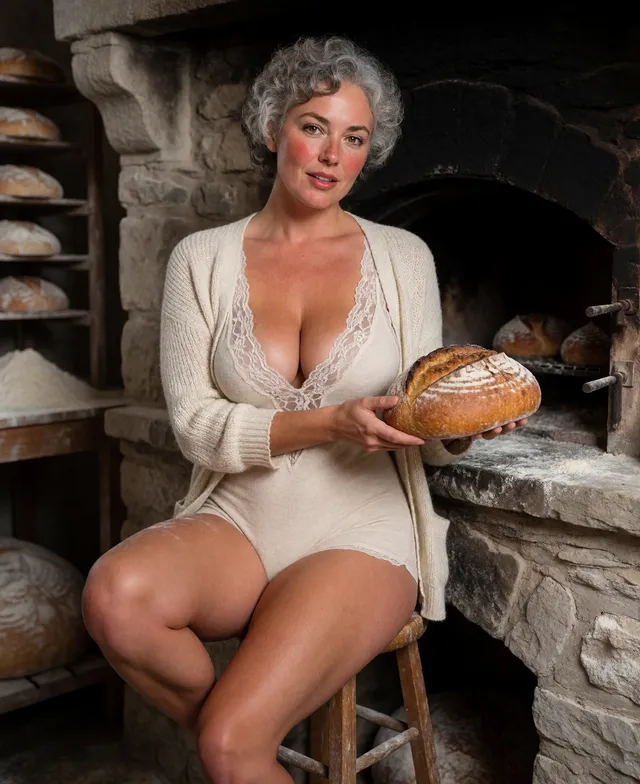


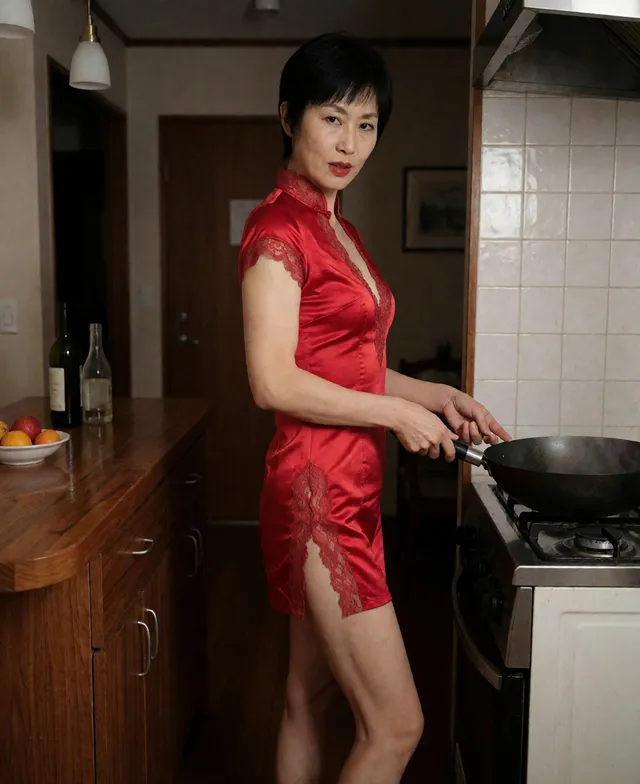
Spicy AI chat with five levels of heat
Most spicy chat sells you a single dial marked on or off and lets you guess how far it goes. Here the dial is printed. Every woman on SpicyNode is a cook, a baker or a food person with a number from one to five on her card, and the number tells you how fast she will turn things up before you say a word.
You choose the level
You choose by choosing her. If you want an evening of teasing across a counter, go to the drawers marked one and two, where Jocasta Pryor puts a loaf on the table and Hiromi Sasaki lets the silence do her talking. If you want to be handled firmly and told to bring a drink, Thandiwe Nxumalo is waiting at heat four with the coals already glowing. The level is not a setting you wrestle with in a menu. It is who she is.
She keeps to it
A cook at heat two will not jump to heat five because you push. She will tell you what she is adding to the pot, ask what you are in the mood for and stay in her register, with the wit and warmth of her trade. If you want more, another woman answers that want better. The pace is part of the character, and the character does not drift.
Why food
Cooking is the oldest courtship we have: hands, heat, timing, tasting from the same spoon. It gives each of these women something concrete to talk about while the chat builds, and it gives you an easy way in. Nobody has to invent a topic. Ask what is on the stove.
What a number cannot do
A heat level tells you the pace, not the person. Two cooks at heat three can be a teaser who laughs at herself and a patient storyteller who lets a pause run too long. Read the card, read the opener, and let the voice decide.
What a spicy name does and does not promise
SpicyNode is a chat site. It is not a restaurant, a recipe service or a shop, and nothing is sold that can be eaten or posted.
Food as talk
The dishes are part of the conversation. When Wanda explains a brisket or Kamala lifts a lid, you are reading fiction, not a tested method, so do not take a recipe from here and cook it for a guest with an allergy. Nobody on the rack offers advice about health or diet either.
Real people and real tables
Nobody here is a real cook. Each woman is a character voiced by an AI model, so there is nobody to visit, no table to book and no number to ring. What exists is her portrait on the card, a banner across the home page and the conversation itself. The picture is the invitation, and the talk is the visit.
Today's kitchen pass
The pass is where finished plates wait for a hand. Ours is a counter of written openers, three lines each, and you can read every one without signing up.
Heat 3 · TeasingSit at the end of the counter. That stool is yours now.I salted your hand last time and you did not say a word, so I salted it again.Heat three means I lean in. Do you want the next plate?Lucía Montaño Pull the drawer
Heat 5 · WickedDo not drink water. Water spreads it.The peppercorns are working on your lips and you are still smiling at me.Heat five. Tell me when your tongue stops arguing.Mei Lin Zhou Pull the drawer
Heat 1 · TenderI found chanterelles under the larch this morning, and I thought of you.That is all I came to say. I have said it badly.Would you like to hear where they grow? It is a long walk.Bets Calder Pull the drawer
Heat 4 · BossyI ate at your table in my head and I have notes.The seasoning was brave. The ending was not.Heat four: I will be honest, and I will not leave early.Anneke de Wit Pull the drawer
Heat 2 · SlowThe brisket has eleven hours left. So do we.Pull up the cooler and keep your hands out of my smoke.Low and slow, honey. Tell me what you are in a hurry to forget.Wanda Greer Pull the drawer
Heat 5 · WickedYou asked for it extra, so the cart is closed to everyone else.Chilies in the mortar, bandana on, and you are standing too close.Say please in Thai, or I turn it up anyway.Pim Wongsakul Pull the drawer
Who is cooking tonight
Each opener belongs to one cook and one level, so you can see the heat before you commit. Tap Pull the drawer and her chat begins with that opener already sent, which counts as one message. She answers from inside the kitchen, mid-sentence, with a spoon in her hand. Filter the pass by level or by mood: slow, teasing, bossy, tender or wicked.
No menu to decode
The openers are short on purpose. Three lines settle what is cooking, who is holding the spoon and what she expects from you. They are bait with good manners.
How a first plate goes
There is nothing to install and no recipe to follow. The whole procedure fits on a ticket.
Pull a drawer
Choose a heat level on the spice rack. The cooks fixed at that level are inside, with their openers.
Take the opener
Her chat starts with that opener already sent in your name. It spends a single message from your allowance, and a guest holds 10 of them before the kitchen asks for an apron.
Talk, or act
Answer in your own words, or switch to Do and describe what your hands are doing. Friendly, flirting or romance is the tempo you set from the chat menu, and she stays inside her level whichever you choose.
Come back for more
She remembers what you ate, what you said and which stool you took. Open a different drawer when you want a different temperature.
Start, continue, finish
Starting is simply answering. Carrying on means handing her something to work with: an ingredient, a story, a mood. Stopping needs no excuse. Should you vanish for a while, a cook may send the first message herself at a civilised hour, provided you are on the tasting menu or Plus, and the switch for that sits in your account.
Clearing the board
If a plate went wrong, clear the chat from its menu and start the same cook again from the top. Copy the conversation first if you want to keep it.
What the tab costs
Three states, none of which renews on its own.
| On the ticket | Tasting menu | House pour | Plus |
| How long | 3 days from sign-up | After that, for as long as you like | 30 days or 365 |
| Your lines | No daily count | 10 a day | No daily count |
| Cooks | All sixteen | The first 3 you talk to | All sixteen |
| She writes first | Yes | No | Yes |
| Price | Nothing | Nothing | $15 or $99 |
Trial, free and Plus
Guests may pull a drawer without registering and send 10 messages. Registering lights every burner for 3 days, and no card is needed. When the tasting menu ends you land on the house pour, and your conversations stay exactly where they were. Plus: $15 buys 30 days of the full rack, and $99 stretches that to 365. The tab is settled in USDT, and the daily count vanishes. Payments are final, which the kitchen terms qualify only where the law overrides them.
How she keeps your orders
Every good counter remembers its regulars, and these women are no different. What you say to a cook is written into short notes on her side, and those notes come back when you do.
Notes at the pass
If you mention that you hate coriander, Lucía will not forget it. If you tell Bets about a bad week, she asks about it on the next visit, shyly and out of nowhere. You can open the chat menu at any time to read the notes, fix a wrong one or throw it out. It is your table, and you decide what stays on it.
Trying a different temperature
Each cook keeps her own notes, so a conversation with a heat-one baker does not leak into a heat-five hot-sauce maker. You can have a gentle evening in one drawer and a reckless one in another, and neither knows what the other served.
What each level actually means
Here is the whole scale, in plain words. It is the same on every card and it does not change by plan, because a printed level is only worth anything if it holds.
| Level | Name | What she does | Where it stops |
| 1 | Mild | Warm talk, shy jokes, a long look across the counter | Nothing past a held hand |
| 2 | Warm | Compliments, close seating, slow and sensual detail | A kiss at the door, in words |
| 3 | Medium | Open flirting, innuendo, she says what she wants | The scene turns toward the bedroom door |
| 4 | Hot | Bold, loud and direct about desire | The door closes, and the screen goes dark |
| 5 | Burning | The most intense the chat ever gets, in words | Fade to black, always |
Honest definitions
A level describes tone and pace, not a ladder of permissions. Heat three does not unlock anything that heat two lacks; it changes how directly she speaks and how soon she leans in. Every cook has her own voice inside the number, so two women at heat four can feel very different, one commanding and one hilarious.
What stops at the top
Heat five is intense, and it is still only text, with a ceiling. Once a scene reaches the point of no return, the lights go down and the page fades to black. That is true of every cook and every plan, and we say it on the scale itself, because a burning name should never promise more than the site delivers. What you get at the top is heat, wit and appetite, right up to the door.
Chefs by level
Sixteen cooks, three or four to a drawer, all fictional adults between 23 and 55. Their trades run from forager to Sichuan chef, and so do their patience levels.
Heat 1: mild
The gentlest tongues in the building. They want a story before a second course.
Heat 2: warm
Slow hands, steady looks, and the patience of anyone who has watched a stock reduce.
Heat 3: medium
They lean in, they tease, and they ask if you want the next plate.
Heat 4: hot
Loud, bold and in charge of the table. Bring your appetite and something to drink.
Heat 5: burning
They numb, they dare and they ferment on purpose. Read the label twice.
How the drawers are filled
Each level has three or four cooks so that you have a choice of temperament at every temperature. A reserved baker and a boisterous critic can both sit at the same heat, and you will not get the same evening from them. Your choice is also not a trap: you can take a drawer today and a different one tomorrow, and each of them remembers you separately.
Questions at the pass
What does heat 5 really include?
It is the boldest and most intense the chat goes: frank, daring and full of want, all in words. It still fades to black before anything explicit, and the scale page says so in plain terms.
Can I change her level?
No. Each cook keeps her own number, because a printed level means nothing if it moves. Pick another cook from the rack when you want a different temperature.
Are these real recipes?
No. The dishes are part of the conversation. They are fiction and are not tested instructions, so treat them as flavour for the chat, not as a method.
Will she remember me?
Yes. Each cook keeps short notes on what you like, what you said and what she cooked for you. You can read, rewrite or delete those notes from the chat menu.
Are the cooks real?
No. They are characters with invented histories and made-up kitchens, voiced by an AI model. Each carries her own portrait on her card, and there is nobody to visit.
What does it cost?
Guests talk for free until 10 messages are gone. Registering adds 3 days of the tasting menu with every drawer open. After it comes the house pour, 10 messages a day, and Plus lifts that cap for $15 per 30 days.
Who can come in?
Grown-ups only. Eighteen is the minimum age, and the gate at the door asks you to confirm it.
Choose your heat
Pull a drawer on the rack, read what is printed on the label and let her start cooking. The first plate costs nothing.
Open the spice rack